Antarctic Research Stations
A Glimpse into the Extreme
Antarctica is a land of extremes! It's the southernmost continent, home to the South Pole, and it's covered by a thick ice sheet. Antarctica is the fifth-largest continent and the only continent without a native human population. There are seven territorial claims to Antarctica from Argentina, Australia, Chile, France, Great Britain, New Zealand and Norway. It is governed by about 30 countries, all of which are parties of the 1959 Antarctic Treaty System. Although not a British territory, the British have a long history of exploration on the continent and if not for some bad luck Captain ‘Scott of the Antarctic’ may well have been the first to reach the South Pole - a fantastic achievement five weeks earlier by Norwegian, Roald Amundsen.Key Features
Size:
Antarctica is the fifth-largest continent, roughly the size of the United States and Mexico combined.Climate:
It's the coldest, windiest, and driest continent. Temperatures can drop as low as -80°C (-112°F) in the winter!Wildlife:
Despite the harsh conditions, it hosts unique wildlife including penguins, seals, and various bird species. The ocean surrounding it teems with krill, which is vital to the marine food web.Research:
Around 1,000 to 5,000 scientists from various countries live and work at research stations across the continent, studying climate change, wildlife, and more.No Permanent Residents:
Unlike other continents, it has no indigenous population or permanent residents.Exploration and Treaties
History of Exploration:
Early explorers like Ernest Shackleton, Captain Robert Falcon Scott and Roald Amundsen made perilous journeys to map and study Antarctica.Antarctic Treaty:
Signed in 1959 by 12 countries, this treaty preserves the continent for peaceful scientific research and bans military activity.Interesting Facts
Midnight Sun and Polar Night:
In the summer, the sun doesn't set for months (midnight sun), and in the winter, it doesn't rise for months (polar night).Ice Shelves:
The continent's ice shelves, like the Ross Ice Shelf and the Larsen Ice Shelf, play crucial roles in regulating the global climate by reflecting sunlight and storing freshwater.Research Stations
Antarctica, a continent of extreme cold, wind, and isolation, has nonetheless become a hub for scientific research. Numerous countries have established research stations on this frozen land, each offering unique insights into the Earth's climate history, biodiversity, and geological processes.Why Antarctica?
Climate Change Research:
Antarctica holds vital clues to understanding climate change, including past ice ages and future sea-level rise.Astronomy:
The clear, dry atmosphere and long nights make it an ideal location for astronomical observations.Biodiversity:
Despite the harsh conditions, a diverse range of life, including unique microorganisms and marine species, exists in Antarctica.Geology:
The continent provides insights into the Earth's geological history, particularly plate tectonics and continental drift.Some Notable Antarctic Research Stations:
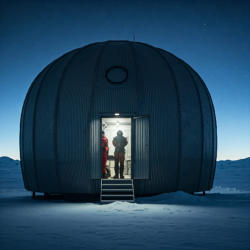
• McMurdo Station (United States): The largest U.S. research station in Antarctica. Supports a wide range of scientific disciplines, including biology, geology, and atmospheric science. • Amundsen-Scott South Pole Station (United States): Located at the geographic South Pole. Primarily focused on astronomy, atmospheric science, and glaciology. • Halley VI Research Station (United Kingdom): A modular research station designed to withstand harsh Antarctic conditions. Studies the Earth's magnetic field, ozone layer, and climate change. • Vostok Station (Russia): Known for its extremely low temperatures, making it one of the coldest places on Earth. Research focuses on glaciology, meteorology, and astrophysics. • Mawson Station (Australia): Located on the coast of Antarctica. Conducts research in geology, geophysics, atmospheric science, and biology.Life at a Research Station
Life at an Antarctic research station is challenging and demanding. Scientists and support staff work long hours in extreme conditions, often isolated from the outside world for months at a time. They face risks such as severe weather, equipment failures, and potential health issues. Despite these challenges, the rewards of Antarctic research are significant, contributing to our understanding of the Earth and its future.The Challenges of Antarctic Research
Life in Antarctica is a unique and challenging experience. Here are some of the primary difficulties faced by researchers:Extreme Weather Conditions:
• Harsh Winter: Long, dark winters with temperatures plunging to well below -80°C (-112°F). • Fierce Winds: Strong, biting winds can reach hurricane force, making outdoor work nearly impossible. • Blizzards: Severe snowstorms can reduce visibility to zero and create hazardous conditions.Isolation and Confinement:
• Remote Location: Antarctic stations are often thousands of kilometres from the nearest civilization. • Limited Social Interaction: Long periods of isolation can lead to feelings of loneliness and homesickness. • Restricted Activities: Leisure options are limited, and entertainment choices are often confined to indoor activities.Physical and Mental Health Challenges:
• Cold Injuries: Exposure to extreme cold can cause frostbite and hypothermia. • Altitude Sickness: Some stations, like Amundsen-Scott South Pole Station, are at high altitudes, which can lead to altitude sickness. • Mental Health Issues: The harsh environment, isolation, and long hours can contribute to mental health problems like depression and anxiety.Logistical Challenges:
• Supply Chain Issues: Delivering supplies to Antarctic stations can be difficult and costly, especially during the harsh winter months. • Equipment Maintenance: Maintaining equipment in extreme cold and harsh conditions is a significant challenge. • Field Work: Conducting fieldwork in Antarctica requires careful planning and preparation, as weather conditions can change rapidly. Despite these challenges, the allure of scientific discovery and the unique beauty of the Antarctic landscape continue to draw researchers from around the world. By overcoming these obstacles, scientists are able to make groundbreaking discoveries that contribute to our understanding of the Earth's past, present, and future. The British Antarctic Survey based in Cambridge looks after the British interest on the continent.



 Pubs
 Open Map in New Window
 England
 Scotland
 Wales
 Ireland
 County Map
 About Britain
 Pubs
 British Beer
 Perfect Pint
 Beer Glasses
 The Barren Years
 Real Fires
 Breweries
 Brewing
 British Food
 Recipes
 Pub Interiors
 Dog Friendly
 Pub Games
 Strange Pub Names
 Visitor Information
 Oldest Pub
 Pub Signs
 Micropubs
 Buildings
 Cathedrals
 Stately Homes
 Castles
 Listed Buildings
 Scheduled Monuments
 Oak Framing
 Architecture
 Thatching
 Waterways
 Sailing
 Shipbuilding
 Boatbuilding
 Shipping Forecast
 Britain's Coastline
 Coastal Locations
 Piers
 Lighthouses
 Harbours
 Beach Safety
 British Beaches
 Canals
 Rivers
 Islands
 Lakes
 Waterfalls
 Historical
 Famous People
 Kings & Queens
 Kings of England
 History of Britain
 Industrial Revolution
 Act of Union
 Beaufort Scale
 British Firsts
 World Heritage Sites
 Historical Periods
 Historical Boundaries
 Tradition & Culture
 Morris Dancing
 Film & Television
 Television
 Calendar of Events
 British Sport
 Scottish Highlands
 Money
 Dry Stone Walling
 British Wildlife
 Class System
 Geographical
 Pub Boundaries
 Facts 'n' Figures
 British Isles
 Other Areas
 Place Name Origins
 Topography
 Suggest an Inn
 Explanation of symbols
 Why Us?
 Places to Visit
 Long Distance Paths
 National Parks
 Areas of Outstanding Natural Beauty
 Coastal Locations
 Other areas of Britain
 Maps
 Our Favourite Locations
 Search
 Focus On...
 News
 Contact
 About Us
 Our History
 Donate
