The Black Country
There is much debate about The Black Country, particularly the boundary and whether
Wolverhampton is in or out. The currently recognised Black Country area encompasses the coal
mining areas of Dudley, Sandwell, Walsall and Wolverhampton in what was originally part of the Earl
of Dudley’s Staffordshire coalfields.
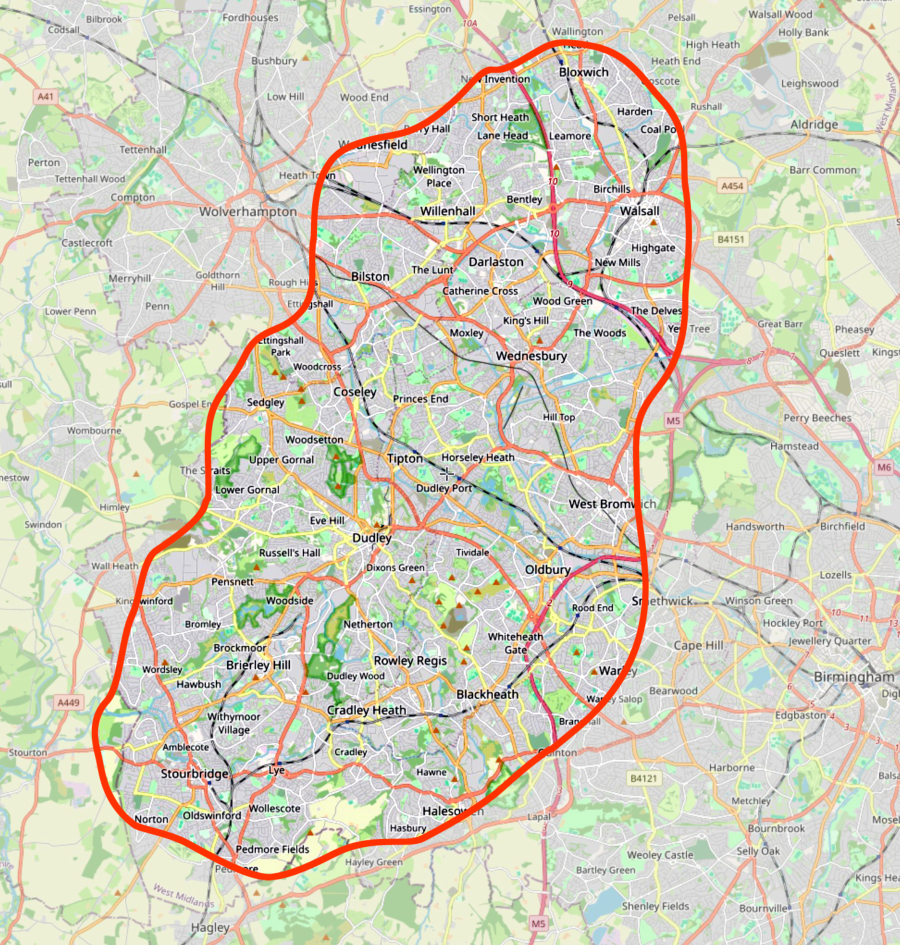
Originally however, the Black Country area was the middle plateau between the manufacturing
towns of Birmingham, Walsall and Wolverhampton.
Why is it called the Black Country?
The name became common in the 19th century and is usually linked to the region’s industrial landscape: 1. Extensive coal seams close to the surface. 2. Thousands of furnaces, foundries and forges. 3. Smoke, soot and slag heaps that darkened the landscape during the peak of industrialisation. Victorian visitors frequently remarked on the blackened buildings and polluted air, though the exact origin of the name is not tied to a single documented first use. Wednesbury, Darlaston, Willenhall, Bilston, Coseley, Tipton, Dudley, Brierley Hill and the adjacent villages all sat over a shallow coal seam and this made it relatively easy to mine making the area the first to become heavily industrialised. The seam was typically around 25–30 feet (7.5–9 metres) thick, although in some places it reached over 30 feet (about 10 metres). What made it unusual was that elsewhere in Britain coal was often found in multiple thinner seams separated by layers of rock. In much of the Black Country, several coal seams had merged together geologically into a single exceptionally thick seam. This made mining easier and more profitable because miners could extract large quantities of coal without repeatedly cutting through layers of stone.Industrial significance
The Black Country was one of the world’s most important industrial regions in the 18th and 19th centuries. It specialised in: • Coal mining - Fuel for local industry • Iron production - Blast furnaces and foundries • Chainmaking - Cradley Heath and surrounding towns • Nailmaking and metalworking - Small workshops and home-based production • Engineering and manufacturing - Tools, locks, tubes and industrial components The area was criss-crossed by a dense network of canals, many of which survive today.Culture and identity
Residents often identify strongly as Black Country people. Distinctive features include: • the Black Country dialect, with vocabulary and pronunciations that differ from both Birmingham and standard English, • strong traditions of working-class industrial culture, • local foods such as grey peas and bacon, faggots and pork scratchings. This middle belt of industrial heartland was the start of the Industrial Revolution with Dud Dudley (1600–1684), one of the first Englishmen to smelt iron ore using coke. Dud’s father, Edward Sutton, 5th Baron Dudley owned substantial estates around Dudley Castle including the manors of Dudley, Sedgley and Kingswinford. Sutton set up an early reverberatory furnace using coal which became the type used at Coalbrookdale and various other places by Abraham Darby in 1709. Darby was the Great Grandson of Dud Dudley’s sister. The Black Country area is at a higher altitude than many parts of England so there are no major rivers, historically used to transport the first goods. There are also no major Roman Roads. Whilst the Black Country wasn’t the very first area to build canals, due to the weight of coal, it wasn’t long before canals became the best and most profitable way of getting the raw materials of coal and iron to the manufacturing towns. One horse-drawn canal barge could carry about thirty tonnes at a time, faster than road transport and at half the cost. The earliest canals were improvements to existing river navigations until James Brindley & Thomas Telford made vast improvements with bridges and aqueducts in favour of expensive cuttings & tunnels. The canals caused a great change in the economy of Britain, it not only made it easier to transport materials between Wolverhampton, Walsall and Birmingham, it also opened up routes to the Potteries in Stoke and the mills of Manchester. The Staffordshire & Worcestershire canal opened in 1772 as did the Birmingham to Wolverhampton Old Main Line with a further link between the two in 1792 when the Dudley tunnel opened linking the 1779 Stourbridge Canal. The area became thick with black smoke from numerous chimneys with coal mines, coking, iron foundries, glass factories, brickworks and steel mills, producing a high level of air pollution. The name “Black Country” dates back to the 1840’s although it is not known whether the area became known as such due to the smoke pollution or the coal seam. In 1829 the Earl of Dudley created a 40 mile railway network around his coal fields in Pensnett linking them to Round Oak Steelworks in Brierley Hill and Ashwood canal marina on the Staffordshire and Worcestershire Canal. In 1852 the Oxford, Worcester and Wolverhampton Railway (which became part of Great Western Railway (GWR) in 1863) opened their route to Dudley further linking the Black Country to the rest of the UK. Although the original Black Country was the mineral producing central belt between Wolverhampton, Walsall and Birmingham, the wider Black Country Area in the map above became a UNESCO Global Geopark on Friday 10 July 2020 in recognition of the international importance of its natural and cultural heritage. You can experience what it was like to live in the Black country in Victorian Britain with a visit to the Black Country Living Museum near Dudley. There is also a similar museum in Shropshire with close ties to the Black Country through Abraham Darby, Blists Hill Victorian Museum.Black Country Living Museum
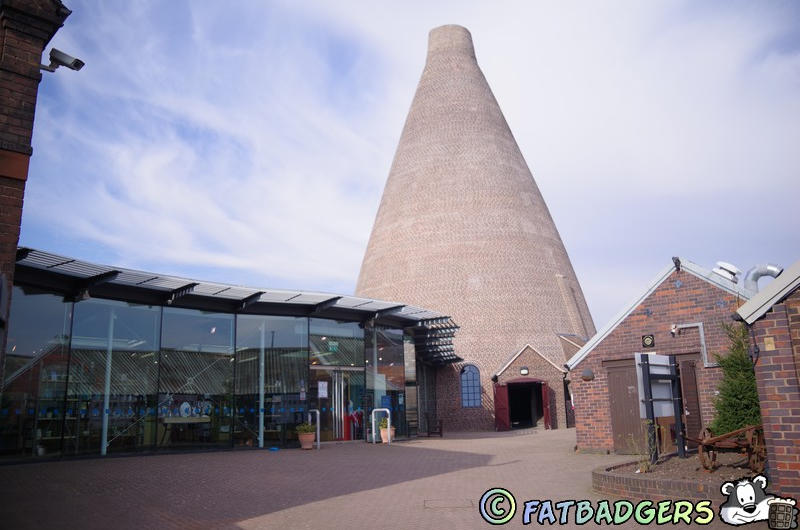
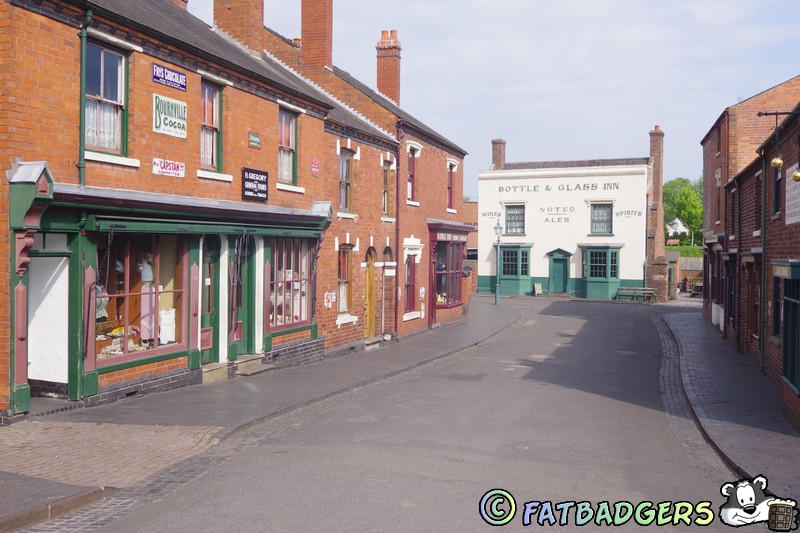
The Black Country Living Museum is an open-air museum that brings the history of the Black Country to life. Buildings have been removed from their original locations due to re-development and carefully re-built in the grounds of the museum. There’s even a couple of pubs to try - The Bottle & Glass which originally stood close to Stourbridge Canal Top Lock on Brierley Hill Road, Brockmoor and the Elephant & Castle which originally stood on the Junction of Stafford Street and the Cannock Road in Wolverhampton.What to Expect at the Museum
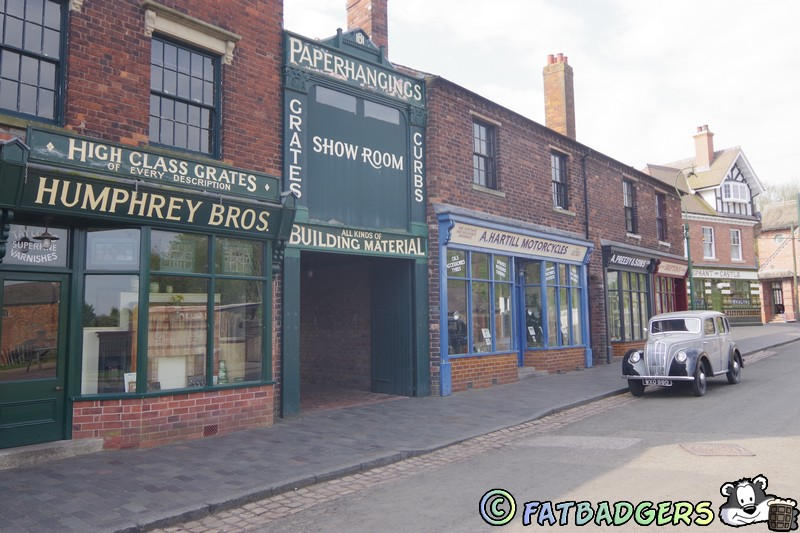
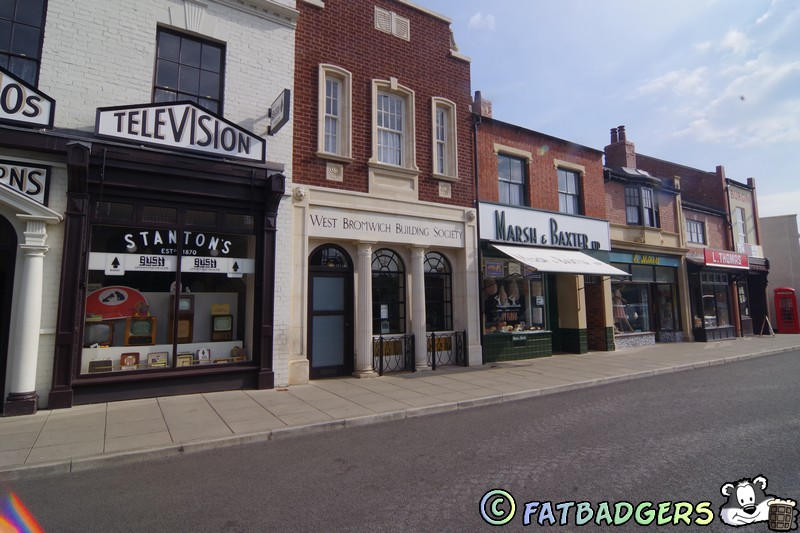
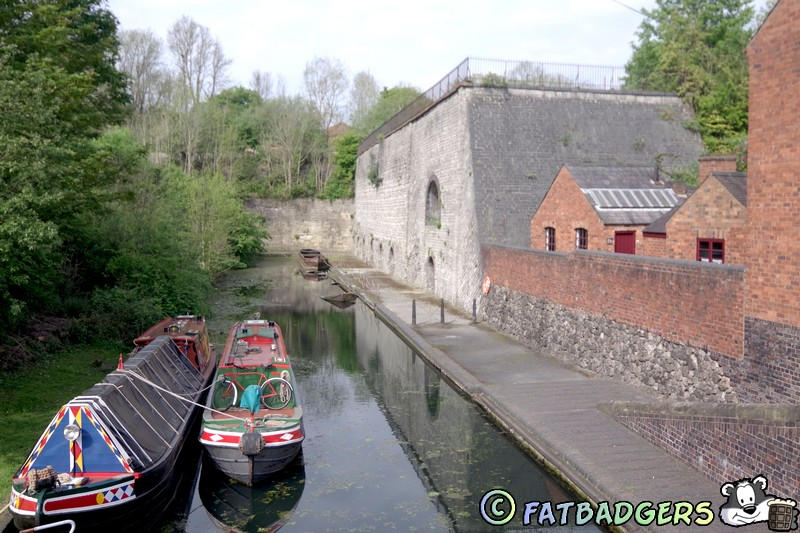
The museum recreates life in the Black Country between the late 18th and early 20th centuries, with over 50 historic buildings relocated and reconstructed. Visitors can explore: • Authentic Shops and Houses – Walk through a Victorian-era high street with real historical buildings. • Industrial Workshops – See blacksmiths, chain makers, and other traditional trades in action. • Coal Mine Experience – Go underground to experience the tough working conditions of miners. • Vintage Vehicles – Ride a historic tram or bus around the site. • Canal Side Village – Discover the importance of the Black Country’s canal system for industry. • 1920s and 1930s Expansion – The museum has been adding more buildings from this period, including a recreation of the famous Elephant & Castle pub.Why is it Important?
The museum preserves the working-class heritage of the Black Country, an area that played a crucial role in Britain’s industrial development. It provides a living history experience, with costumed actors bringing the past to life through storytelling, demonstrations, and period-specific activities.Fun Facts
• Parts of Peaky Blinders were filmed at the museum. • The Black Country dialect, considered one of the oldest forms of English, is often spoken by the actors. • The museum has a famous fish and chip shop where the food is cooked in beef dripping, just like in the old days.1. Start at the Visitor Centre
Grab a map and check the schedule for live demonstrations (blacksmithing, glassmaking, etc.). If you’re interested in Peaky Blinders filming locations, ask the staff for highlights.2. Explore the Canal & Industrial Area
Visit the lime kilns and learn how they were used in iron production. Take a canal boat trip through the Dudley Tunnel (extra charge, but worth it!). See the chain-making workshop, where workers once toiled under harsh conditions.3. Go Underground in the Mine Experience
This is one of the most immersive parts of the museum. You’ll experience what it was like for miners working in near-total darkness. (Note: It can be claustrophobic and has uneven ground, so wear sturdy shoes.)4. Walk Through the 19th-Century Village
Stop by St. James’s School and try writing on a slate like a Victorian child. Visit the Blacksmith’s Forge to watch live demonstrations. Explore small shops, including a sweet shop where you can buy traditional Black Country treats.5. Grab Lunch at Hobbs & Sons Fish & Chips
A must-try! Cooked the old-fashioned way in beef dripping, giving it a unique flavour. Queues can get long, so try to go before or after peak lunch hours.6. Visit the 1920s & 1930s High Street (Newer expansion!)
Check out the Elephant & Castle Pub, a recreation of a famous Wolverhampton landmark. See the motor garage with vintage vehicles. Visit the cinema for a silent film experience from the early 20th century.7. Ride a Vintage Bus or Tram
These run throughout the day and offer a great way to see the museum without walking too much.8. Finish at the Gift Shop & Café
Pick up some traditional sweets, books on local history, or even a bottle of locally brewed beer.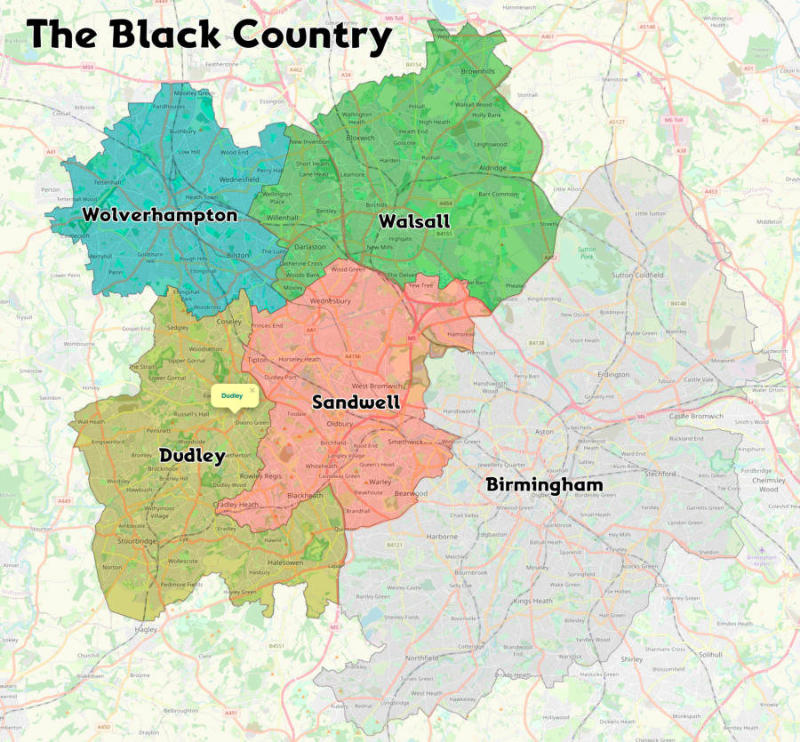


 Pubs
Pubs Open Map in New Window
 England
 Scotland
 Wales
Wales Ireland
 County Map
 About Britain
 Pubs
Pubs British Beer
 Perfect Pint
 Beer Glasses
 The Barren Years
 Real Fires
 Breweries
 Brewing
 British Food
 Recipes
 Pub Interiors
 Dog Friendly
 Pub Games
 Strange Pub Names
 Visitor Information
 Oldest Pub
 Pub Signs
 Micropubs
 Buildings
 Cathedrals
 Stately Homes
 Castles
 Listed Buildings
 Scheduled Monuments
 Oak Framing
 Architecture
 Thatching
 Waterways
 Sailing
 Shipbuilding
 Boatbuilding
  Shipping Forecast
 Britain's Coastline
 Coastal Locations
 Piers
Piers Lighthouses
 Harbours
 Beach Safety
 British Beaches
 Canals
 Rivers
 Islands
 Lakes
Lakes Waterfalls
 Historical
 Famous People
 Kings & Queens
 Kings of England
 History of Britain
 Industrial Revolution
 Act of Union
 Beaufort Scale
 British Firsts
 World Heritage Sites
 Historical Periods
 Historical Boundaries
 Tradition & Culture
 Morris Dancing
 Film & Television
 Television
 Calendar of Events
 British Sport
 Scottish Highlands
 Money
Money Dry Stone Walling
 British Wildlife
 Class System
 Geographical
 Pub Boundaries
 Facts 'n' Figures
 British Isles
 Other Areas
 Place Name Origins
 Topography
 Suggest an Inn
 Explanation of symbols
 Why Us?
 Places to Visit
 Long Distance Paths
 National Parks
 Areas of Outstanding Natural Beauty
 Coastal Locations
 Other areas of Britain
 Maps
Maps Our Favourite Locations
 Search
 Focus On...
 News
News Contact
 About Us
 Our History
 Donate
