


British scientists have consistently been at the forefront of groundbreaking discoveries and
advancements that have shaped our understanding of the world.
Contributions Across Disciplines:
British scientists have excelled in a wide range of fields, including: • Physics: From Newton's laws to Hawking's cosmology, British physicists have pushed the boundaries of our understanding of the universe. • Biology: Darwin's theory of evolution and Fleming's discovery of penicillin have had a profound impact on the life sciences. • Chemistry: British chemists have made significant contributions to the development of new materials and pharmaceuticals. • Computer Science: Turing's work laid the foundation for modern computing, and Berners-Lee's invention of the World Wide Web has transformed our world. These are just a few of the many remarkable British scientists who have made invaluable contributions to human knowledge.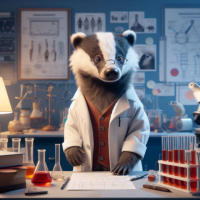
Scientists
John Couch Adams
1819-1892
English astronomer.
He mathematically deduced the existence of the planet Neptune in 1845 from the effects of its gravitational pull on the motion of Uranus, although
it was not found until 1846 by J G Galle. Adams also studied the Moon's motion, the Leonid meteors, and terrestrial magnetism.
Adams was born in Landeast, Cornwall, and educated at Cambridge, where he spent virtually his entire career. He became professor of
mathematics at the University of St Andrews, Fife in 1858, Lowndean professor of astronomy and geometry at Cambridge between 1859-92, and
director of Cambridge observatory between 1861-92.
The calculations to account for certain aberrations in the orbit of Uranus were taken up independently by Adams and the French astronomer
Urbain Leverrier. By 1845 Adams had determined the position and certain characteristics of the hypothetical planet affecting the orbit, but a
search for the new planet was not instigated for nearly a year at Cambridge. Meanwhile, Leverrier sent his figures to Galle at the Berlin
Observatory, and Galle, having better maps, was able to find the planet within a few hours. The discovery of Neptune was credited to Leverrier.
Mary Anning
1799 - 1847
English scientist.
Mary Anning was one of the most remarkable figures in the history of British science.
Despite having little formal education and living at a time when women were largely excluded from professional science, her discoveries helped
transform Victorian understanding of prehistoric life and extinction.
Mary Anning made several discoveries that became famous throughout the scientific world. In 1823, she discovered an almost complete skeleton
of a plesiosaur, Mary also discovered the first pterosaur skeleton found in Britain, helping scientists understand that reptiles had once flown
through prehistoric skies.


Roger Bacon
1214 - 1294
English philosopher and scientist.
He was interested in alchemy, the biological and physical sciences and magic. Many discoveries have been credited to him, including the
magnifying lens. He foresaw the extensive use of gunpowder and mechanical cars, boats, and planes.
In 1266, at the invitation of his friend Pope Clement IV, he began his Opus majus / Great Work, a compendium of all branches of knowledge. In
1268 he sent this with his Opus minus / Lesser Work and other writings to the pope. In 1277 Bacon was condemned and imprisoned by the
Christian church for `certain novelties’ (heresy) and not released until 1292.
Bacon wrote in Latin and his works include On Mirrors, Metaphysical and On the Multiplication of Species. He followed the maxim `Cease to be
ruled by dogmas and authorities; look at the world!’
Bacon was born in Somerset and educated at Oxford and Paris. He became a Franciscan monk and lectured in Paris about 1241-47, then at
Oxford University. He described a hypothetical diving apparatus and some of the properties of gunpowder. He promoted the use of latitude and
longitude in map making, and suggested the changes necessary to improve the Western calendar that were carried out by Pope Gregory XIII in
1582.
Sir George Cayley
1773 - 1857
British scientist.
He is recognised as the founder of aerodynamics on the basis of his pioneering experiments and studies of the principles of flight. He
experimented with wing design, distinguished between lift and drag, formulated the concepts of vertical tail surfaces, steering rudders, rear
elevators, and air screws, and built the world's first glider capable of carrying a human (1853). Cayley was also a founder of the Regent Street
Polytechnic, London. It is generally accepted that the areoplane was invented by Sir George Cayley in 1799 at Brompton, near Scarborough in
Yorkshire in the United Kingdom. In 1909 Wilbur Wright himself paid Cayley the following tribute:
"About 100 years ago, an Englishman … carried the science of flight to a point which it had never reached before and which it scarcely reached
again during the last century."


Charles Darwin
1809 - 1882
English Naturalist
Darwin is known as the discoverer of natural selection.
Charles Darwin was born in Shrewsbury, England. He studied medicine at Edinburgh, then biology at Cambridge. In 1831 he became the
naturalist on HMS Beagle, which was to make a scientific survey of South American waters, and returned in 1836. By 1846 he had published
several works on his geological and zoological discoveries, but he devoted most of his time to his major work 'On the Origin of Species by Means
of Natural Selection' (1859). He postulated that natural selection was the agent for the transmutation of organism during evolution.
He then worked on a series of supplemental treatises, including 'The Descent of Man' (1871), which postulated the descent of the human race
from the anthropoid group. At first Darwin was attacked as an infidel atheist declaring the Bible a lie, but he replied that it increased God's
grandeur to believe that the universe had been created with evolution built in.
Sir George Everest
1790 - 1866
Welsh surveyor.
Born in Breconshire, Wales. He worked on the trigonometrical survey of India from 1806 to 1843. He became superintendent of the survey in
1823 and surveyor general of India in 1830. Mount Everest is named for him. He was knighted in 1861.
Michael Faraday
1791-1867
English scientist
British physicist and chemist, best known for his discoveries of electromagnetic induction and of the laws of electrolysis.
Faraday was born on September 22, 1791, in Newington, Surrey, England. He was the son of a blacksmith and received little formal education.
While apprenticed to a bookbinder in London, he read books on scientific subjects and experimented with electricity. In 1812 he attended a series
of lectures given by the British chemist Sir Humphry Davy and forwarded the notes he took at these lectures to Davy, together with a request for
employment.
Davy employed Faraday as an assistant in his chemical laboratory at the Royal Institution and in 1813 took Faraday with him on an extended tour
of Europe. Faraday was elected to the Royal Society in 1824 and the following year was appointed director of the laboratory of the Royal
Institution. In 1833 he succeeded Davy as professor of chemistry at the institution. Two years later he was given a pension of 300 pounds per
year for life. Faraday was the recipient of many scientific honours, including the Royal and Rumford medals of the Royal Society; he was also
offered the presidency of the society but declined the honour. He died on August 25, 1867, near Hampton Court, Surrey.
Faraday's earliest researches were in the field of chemistry, following the lead of Davy. A study of chlorine, which Faraday included in his
researches, led to the discovery of two new chlorides of carbon. He also discovered benzene. Faraday investigated a number of new varieties of
optical glass. In a series of experiments he was successful in liquefying a number of common gases.
The research that established Faraday as the foremost experimental scientist of his day was, however, in the fields of electricity and magnetism.
In 1821 he plotted the magnetic field around a conductor carrying an electric current. In 1831 Faraday followed this accomplishment with the
discovery of electromagnetic induction and in the same year demonstrated the induction of one electric current by another. During this same
period of research he investigated the phenomena of electrolysis and discovered two fundamental laws: that the amount of chemical action
produced by an electrical current in an electrolyte is proportional to the amount of electricity passing through the electrolyte; and that the amount
of a substance deposited from an electrolyte by the action of a current is proportional to the chemical equivalent weight of the substance.
In experimenting with magnetism, Faraday made two discoveries of great importance; one was the existence of diamagnetism, and the other was
the fact that a magnetic field has the power to rotate the plane of polarised light passing through certain types of glass.
In addition to a number of papers for learned journals, Faraday wrote Chemical Manipulation (1827), Experimental Researches in Electricity
(1844-55), and Experimental Researches in Chemistry and Physics (1859).
Rosalind Franklin
1920 - 1958
Pioneering British scientist
Best known for her crucial contributions to the discovery of DNA’s double-helix structure. A skilled X-ray crystallographer, she captured Photo 51,
a key piece of evidence that proved the DNA model.
Franklin’s work extended beyond DNA - she also made significant discoveries in RNA, viruses, coal, and graphite. Despite her groundbreaking
research, she did not receive the recognition she deserved during her lifetime. After her early death from ovarian cancer, her contributions gained
wider acknowledgment, cementing her legacy as a trailblazer in molecular biology.
Sir Alexander Fleming
1881-1955
Scottish physician and microbiologist
British bacteriologist and Nobel laureate, best known for his discovery of penicillin. Born near Darvel, Scotland, and educated at Saint Mary's
Hospital Medical School of the University of London, he served as professor of bacteriology at St. Mary's Hospital Medical School from 1928 to
1948, when he became professor emeritus.
Fleming conducted outstanding research in bacteriology, chemotherapy, and immunology. In 1922 he discovered lysozyme, an antiseptic found in
tears, body secretions, albumen, and certain fish plants. His discovery of penicillin came about accidentally in 1928 in the course of research on
influenza. His observation that the mould contaminating one of his culture plates had destroyed the bacteria laid the basis for the development of
penicillin therapy (see Antibiotic).
Fleming was knighted in 1944. In 1945 he shared the Nobel Prize in physiology or medicine with the British scientists Howard Walter Florey and
Ernst Boris Chain for their contributions to the development of penicillin.
Thomas Harriot
1560 - 2 July 1621
English astronomer, mathematician, ethnographer and translator
English astronomer, mathematician, ethnographer and translator. Sometimes credited with the introduction of the potato to Great Britain and
Ireland, Harriot's major contribution to British history was the creation of the first ever drawings of the celestial moon after peering through a
telescope in July 1609, before Galileo who is commonly thought of being the first.
After graduating from Oxford University, Harriot travelled to the Americas on expeditions funded by Raleigh, and on his return he worked for the
9th Earl of Northumberland. At the Earl's house, he became a prolific mathematician and astronomer to whom the theory of refraction is
attributed.
Born in 1560 in Oxford, England, Thomas Harriot attended St Mary Hall, Oxford. His name appears in the school's registry that dates back from
1577. After his graduation from Oxford in 1580, Harriot was first hired by Sir Walter Raleigh as a mathematics tutor, was also involved in
designing Raleigh's ships and served as his accountant. During this time he also wrote a treatise on navigation prior to his expedition with
Raleigh.
As a scientific adviser during the voyage, Harriot was asked by Raleigh to find the most efficient way to stack cannon balls on the deck of the
ship. His ensuing theory about the close-packing of spheres shows a striking resemblance to atomism and modern atomic theory.
Halley's Comet in 1607 turned Harriot's attention towards astronomy. In early 1609 he bought a "Dutch trunke" telescope, invented in 1608, and
his observations were amongst the first uses of a telescope for astronomy. Harriot is now credited as the first astronomer to draw an astronomical
object after viewing it through a telescope, a map of the Moon on July 26, 1609 and also to observe sunspots in December 1610.
He also studied optics and refraction and discovered Snell's law 20 years before Snellius did, although, like so many of his works, this remained
unpublished.
Stephen (William) Hawking
1942 - 2018
English physicist
Hawking was born in Oxford, studied at Oxford and Cambridge, and became professor of mathematics at Cambridge in 1979. He is confined to a
wheelchair because of a rare and progressive neuromotor disease. His work in general relativity - particularly gravitational field theory - led to a
search for a quantum theory of gravity to explain black holes and the Big Bang, singularities that classical relativity theory does not adequately
explain.
His book A Brief History of Time 1988 gives a popular account of cosmology and became an international bestseller. Hawking's objective of
producing an overall synthesis of quantum mechanics and relativity theory began around the time of the publication in 1973 of his seminal book
The Large Scale Structure of Space-Time, written with G F R Ellis. His most remarkable result, published in 1974, was that black holes could in
fact emit particles in the form of thermal radiation - the so-called Hawking radiation.
Robert Hooke
1635 - 1703
English scientist, inventor and architect - one of the most important figures of the Scientific Revolution.
He worked across physics, biology, astronomy, engineering and architecture. He discovered the law of elasticity, now called Hooke’s Law. His
book Micrographia was famous for detailed microscope drawings and he was the first person to use the word “cell” after observing cork under a
microscope.
After the Great Fire of London, Hooke helped rebuild London alongside Christopher Wren.
Sir Isaac Newton
1642 - 1727
English Scientist
Isaac Newton is one of the greatest names in the history of human thought.
Newton was born in Woolsthorpe, Lincolnshire, UK. He studied at Cambridge. Legend has it that the fall of an apple initiated the train of thought
that led to the law of gravitation. As professor of mathematics at Cambridge he worked on his famous Philosophiae naturalis principia
mathematica, which supplied a complete proof of the law of gravitation. This law explained celestial motions, the tides, and terrestrial gravitation,
and is regarded as one of the greatest scientific achievements.
He developed a new kind of mathematics known as the calculus. He also invented the reflecting telescope, and discovered that white light is a
combination of all colours by using prisms. Newton sat in parliament on two occasions, was elected President of the Royal Society in 1703, and
was knighted in 1705.
Alan Turing
1912–1954
English Scientist
Turing was a mathematician, logician, computer scientist, and cryptanalyst who is widely regarded as one of the most important figures in the
development of computer science and artificial intelligence.
His pioneering work during World War II in cracking the German Enigma code helped turn the tide in favor of the Allies. Turing’s contributions to
the theory of computation laid the groundwork for modern computers.

 Pubs
Pubs Open Map in New Window
 England
 Scotland
 Wales
Wales Ireland
 County Map
 About Britain
 Pubs
Pubs British Beer
 Perfect Pint
 Beer Glasses
 The Barren Years
 Real Fires
 Breweries
 Brewing
 British Food
 Recipes
 Pub Interiors
 Dog Friendly
 Pub Games
 Strange Pub Names
 Visitor Information
 Oldest Pub
 Pub Signs
 Micropubs
 Buildings
 Cathedrals
 Stately Homes
 Castles
 Listed Buildings
 Scheduled Monuments
 Oak Framing
 Architecture
 Thatching
 Waterways
 Sailing
 Shipbuilding
 Boatbuilding
  Shipping Forecast
 Britain's Coastline
 Coastal Locations
 Piers
Piers Lighthouses
 Harbours
 Beach Safety
 British Beaches
 Canals
 Rivers
 Islands
 Lakes
Lakes Waterfalls
 Historical
 Famous People
 Kings & Queens
 Kings of England
 History of Britain
 Industrial Revolution
 Act of Union
 Beaufort Scale
 British Firsts
 World Heritage Sites
 Historical Periods
 Historical Boundaries
 Tradition & Culture
 Morris Dancing
 Film & Television
 Television
 Calendar of Events
 British Sport
 Scottish Highlands
 Money
Money Dry Stone Walling
 British Wildlife
 Class System
 Geographical
 Pub Boundaries
 Facts 'n' Figures
 British Isles
 Other Areas
 Place Name Origins
 Topography
 Suggest an Inn
 Explanation of symbols
 Why Us?
 Places to Visit
 Long Distance Paths
 National Parks
 Areas of Outstanding Natural Beauty
 Coastal Locations
 Other areas of Britain
 Maps
Maps Our Favourite Locations
 Search
 Focus On...
 News
News Contact
 About Us
 Our History
 Donate
